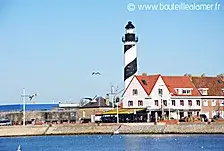
Painters of the Aa Canal Gravelines
Table of Contents
- 👉 The essentials at a glance
- 👉 Painters of the Aa Canal Gravelines: a unique light
- 👉 Eugène Boudin and Georges Seurat: the pioneers of the canal
- 👉 Eugène Chigot and John Brett: the Étaples School on the canal
- 👉 From Maroniez to de Staël: a century of perspectives
- 👉 The Gravelines Group: Van Hecke and his companions
- 👉 Today's artists: Gravelines Art and the Painters on the Canal
- 👉 Practical Information 2026
- 👉 The Holiday home's Verdict
- 👉 FAQ
The essentials at a glance
For 135 years, painters of the Aa canal Gravelines have captured the light of this tidal inlet between Grand-Fort-Philippe and Gravelines. From Seurat (1890) to Gravelines Art (2026), this lineage is preserved at the Museum of Drawing and Original Printmaking — 2 km from the holiday home Bouteille à la Mer.

📷 Georges-Philibert-Charles Maroniez via Wikimedia Commons — Domaine public
📷 Georges-Philibert-Charles Maroniez via Wikimedia Commons — Public domain
Painters of the Aa canal Gravelines Gravelines: a unique light
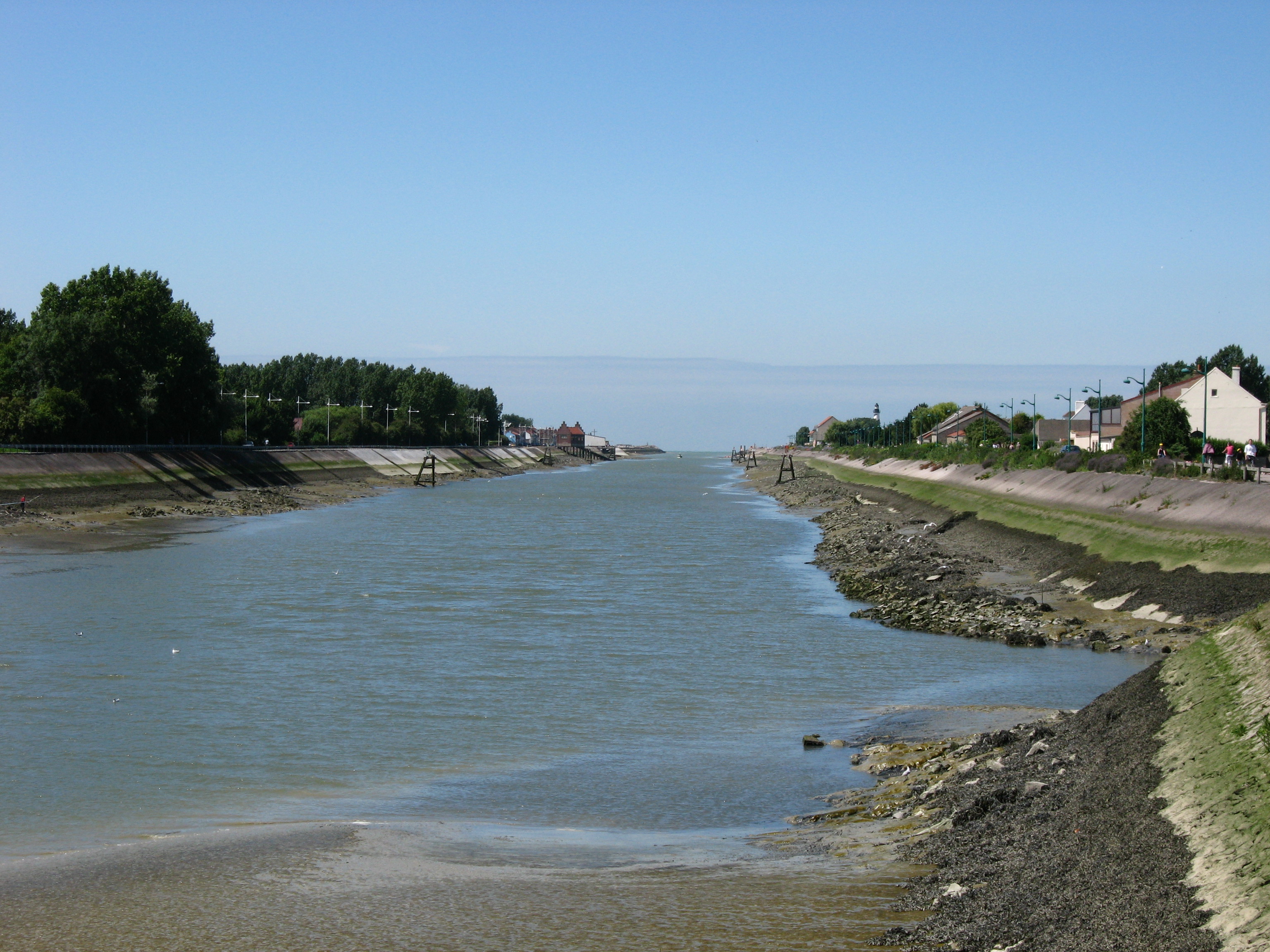
From as early as 1880, the Opal Coast became a favoured destination for the painters of the Aa canal Gravelines Gravelines and beyond, who came to practise plein air painting. Its ever-changing landscapes, its particularly distinctive light and the bustling life of its ports attracted the biggest names in French and European painting. The Aa canal, the natural estuary between Gravelines and Grand-Fort-Philippe, forms the heart of this pictorial heritage spanning more than a century and three great artistic movements: Neo-Impressionism, the Étaples School and Flemish Expressionism.
The major artists who set up their easels here form an exceptional list: Eugène Boudin, Georges Seurat, Eugène Chigot, Georges Maroniez, John Brett, Abel Bertram, André Derain, Nicolas de Staël, Arthur Van Hecke, Raymond Picque, Louis Evrard and Marcel Gromaire.
Eugène Boudin and Georges Seurat: the pioneers of the Aa canal — and why the painters of the Aa canal Gravelines remain so celebrated
Eugène Boudin (1824-1898): the forerunner
Eugène Boudin, born in Honfleur in 1824, was one of the first French painters to work systematically en plein air. A forerunner of Impressionism, nicknamed by Corot the 'king of skies', he mastered shifting marine atmospheres like no other. Boudin painted the coasts of the English Channel and the North Sea throughout his career, and the Gravelines canal was among the northern sites that caught his eye.
Mentor to Monet — whom he persuaded to paint outdoors — Boudin paved the way for a whole generation of artists who came to this northern coastline seeking a light different from that of Normandy.
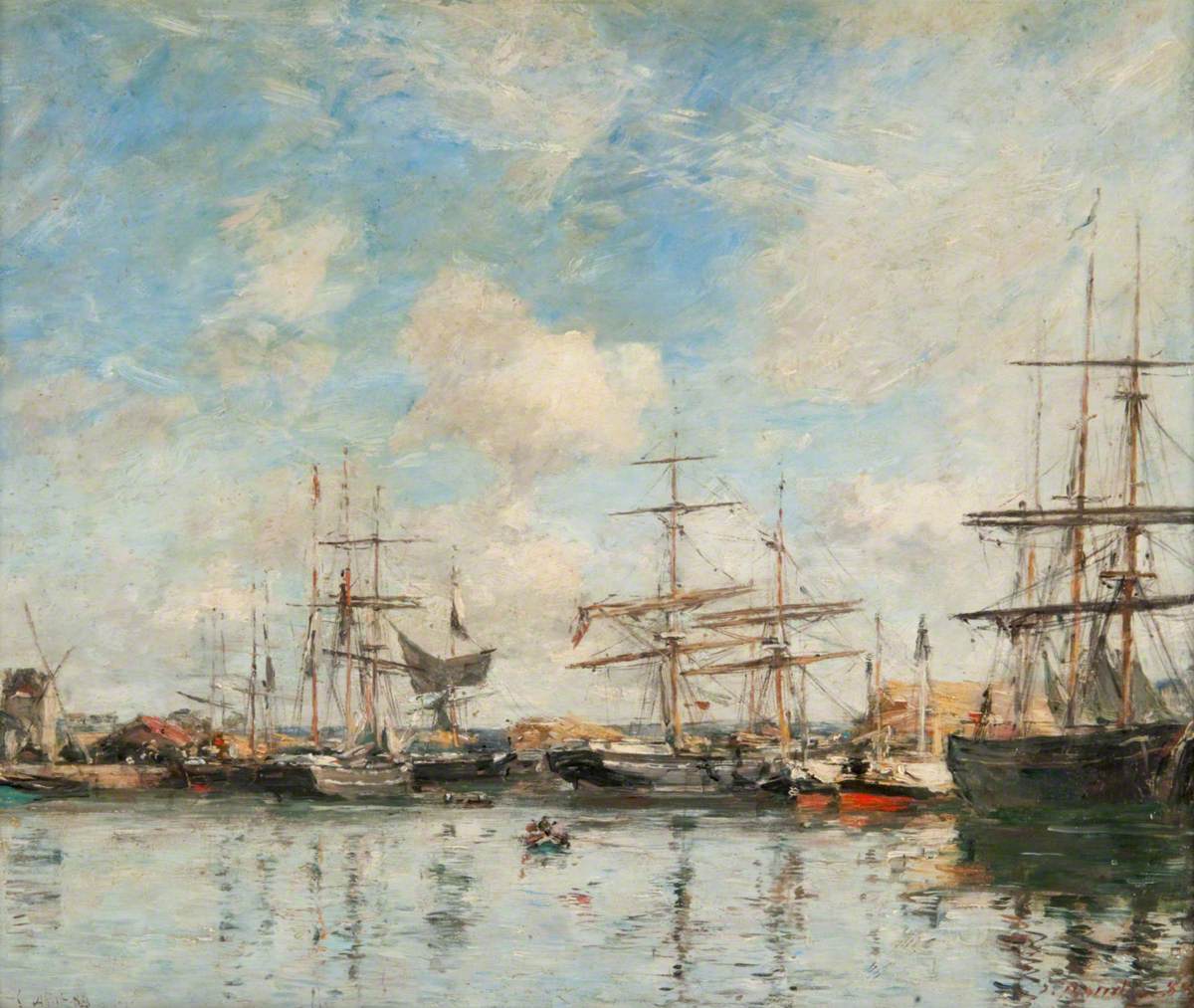
📷 Eugène Boudin via Hunterian Museum Glasgow — Public Domain
Georges Seurat (1859-1891): the summer of 1890 in Gravelines
A major figure of Neo-Impressionism and inventor of the pointillist technique, Georges Seurat discovered Gravelines in the summer of 1890, a year before his untimely death at 31. Contemporary guides described the town as unremarkable — it was precisely this discretion that appealed to Seurat, increasingly protective of his working methods. The straight lines of the canal suited his strictly organised compositions perfectly.
He devoted his last creative energies to four major canvases depicting the Gravelines canal:
- 'The Gravelines Canal, Petit Fort Philippe' (73.3 × 92.1 cm) — Indianapolis Museum of Art
- 'The Gravelines Canal, Evening' (65.4 × 81.9 cm) — Museum of Modern Art, New York
- 'The Gravelines Canal, Towards the Sea' (73 × 93 cm) — Kröller-Müller Museum, Otterlo (Netherlands)
- 'The Gravelines Canal, Grand Fort Philippe' (65 × 81 cm) — National Gallery, London
The total absence of human figures is typical of his seascapes — luminous stillness, grandeur and absolute calm. His landscapes of the Aa canal exude a unique atmosphere that still resonates today in the light of Grand-Fort-Philippe.
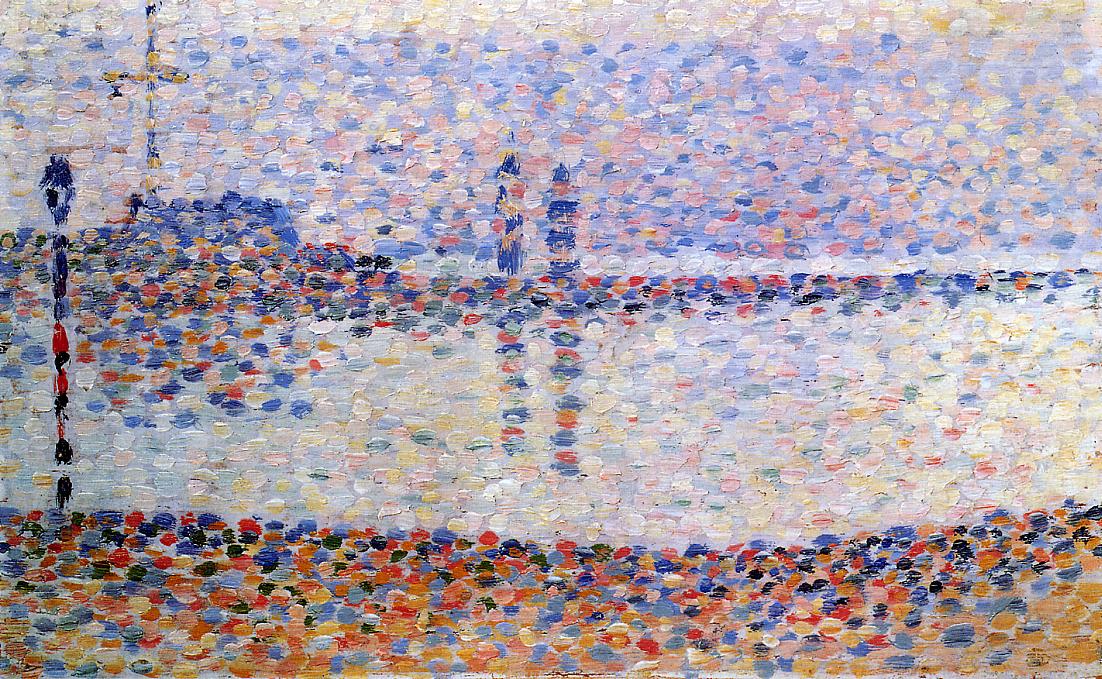
📷 Georges Seurat via Musée de l'Annonciade — Public Domain
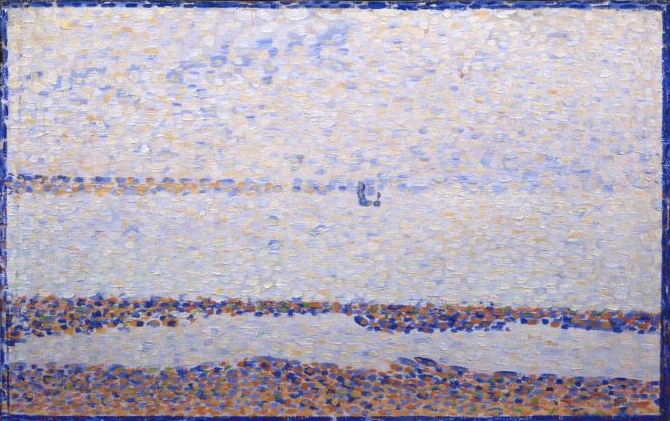
📷 Georges Seurat via Courtauld Gallery — Public Domain
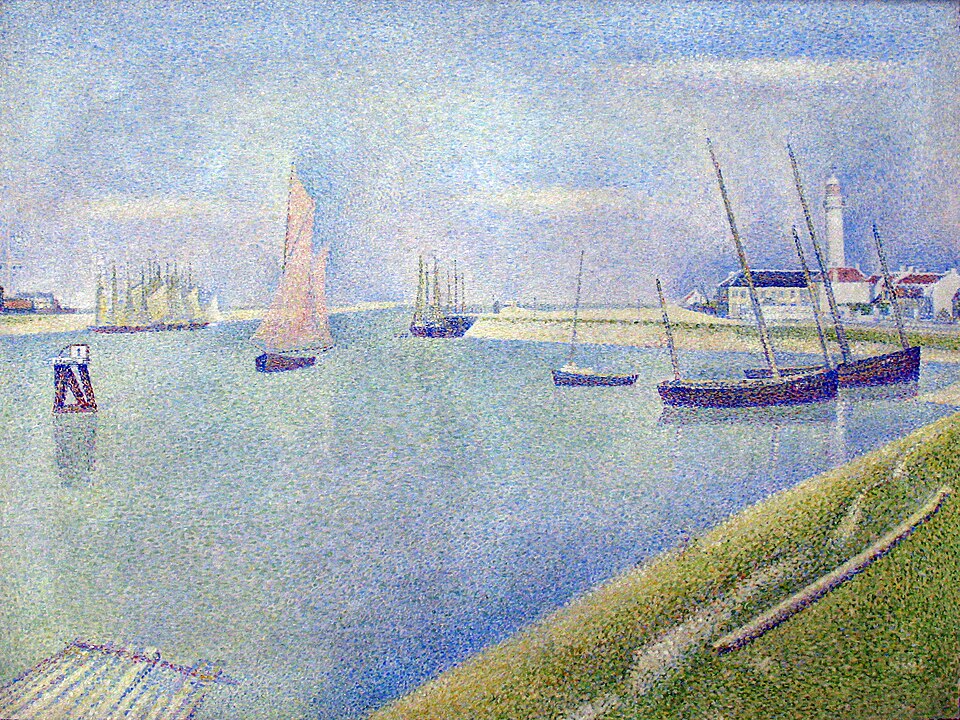 📷 Georges Seurat via Wikimedia Commons — Domaine public
e." title="Painters of the Aa canal Gravelines — Seurat, The Gravelines Canal 1890" fetchpriority="high" style="max-width: 100%; height: auto; border-radius: 8px; display: block; margin: 0 auto;">
📷 Georges Seurat via Wikimedia Commons — Public domain
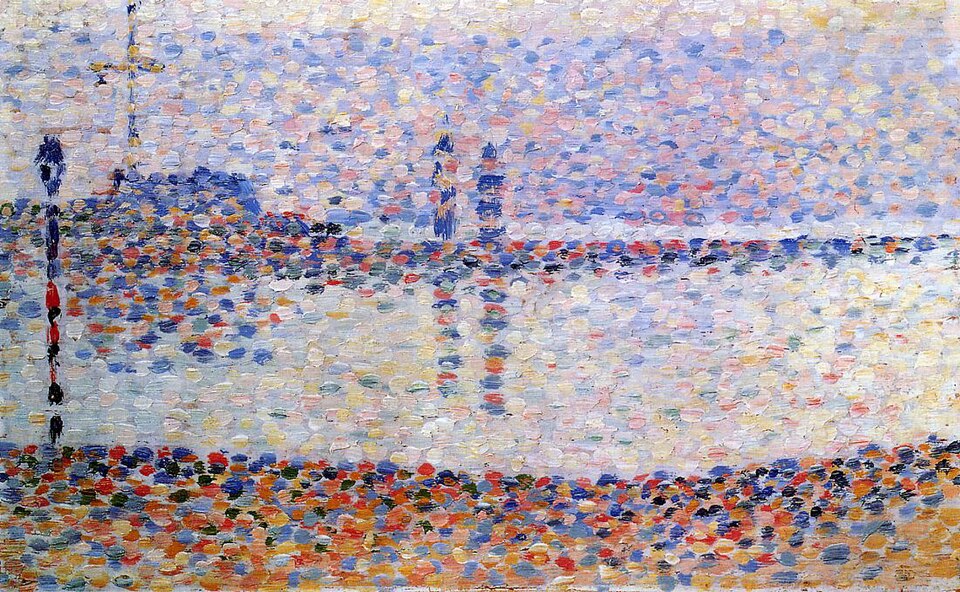
📷 Eugène Chigot — Public domain
🗞️ 2026 news: The Courtauld Gallery in London presented 'Seurat and the Sea', the first global exhibition devoted to Seurat's seascapes (13 February — 17 May 2026). The four Gravelines canvases remain on display in their respective museums (MoMA New York, National Gallery London, Indianapolis, Kröller-Müller Otterlo).
Eugène Chigot and John Brett: the Étaples School on the Aa canal – a must-see for painters of the Aa canal Gravelines
Eugène Chigot (1860-1923): a son of Gravelines and leading figure of the Étaples School
Eugène Chigot was born in Gravelines in 1860, the son of painter Alphonse Chigot. Trained at the Beaux-Arts in Lille, he was admitted to the Living room of French Artists in 1883 and organised the first major group exhibition of the Étaples School in 1892. A great traveller, he painted many European ports and coastlines, but regularly returned to the banks of the Aa canal where he was born.
His Gravelines works reveal an intimate knowledge of the area: the changing light of the North Sea, the play of reflections on the canal, and the lives of fishermen and sailors. They are held in major institutions: the Musée des Beaux-Arts de Lille, the Musée d'Orsay in Paris,
📷 Eugène Chigot — Domaine public
and the Musée national de la Marine.
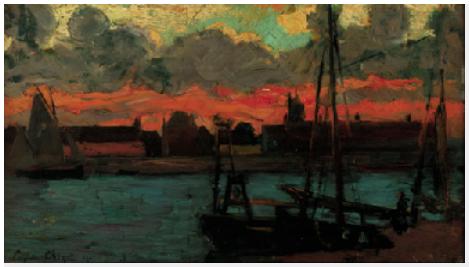
📷 Eugène Chigot — Domaine public
📷 Eugène Chigot — Public domain
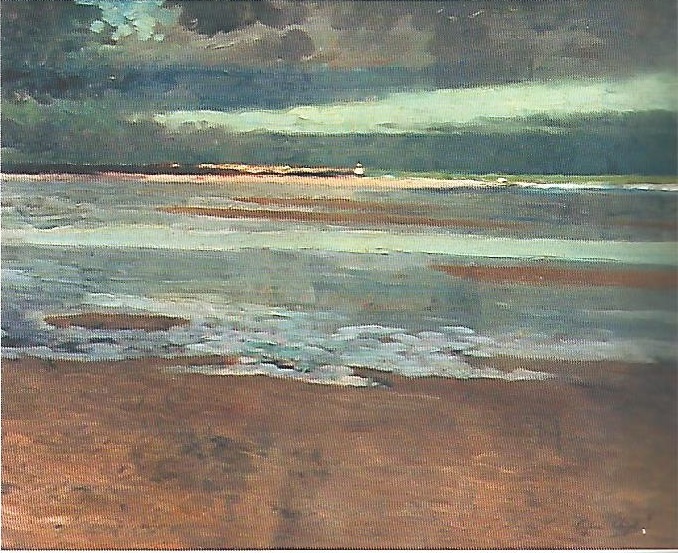 📷 Georges Seurat — Domaine public
Tide Painting Gravelines Eugène Chigot" fetchpriority="high" style="max-width: 100%; height: auto; border-radius: 8px; display: block; margin: 0 auto;">
📷 Georges Seurat — Public domain
John Brett (1831-1902): a British view of the cockle fishermen
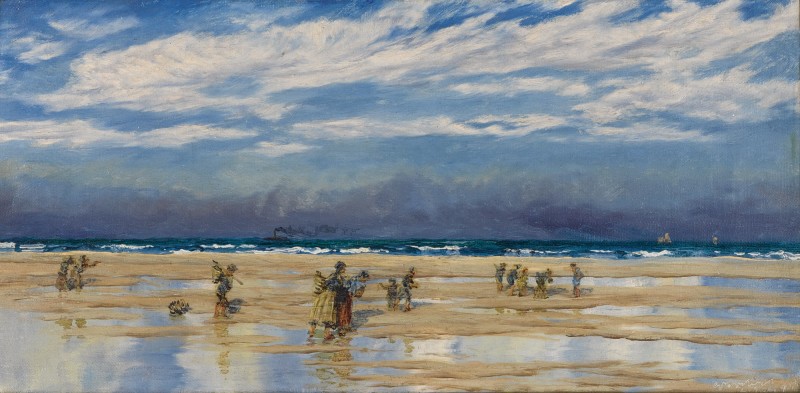
British Pre-Raphaelite painter John Brett brings a fascinating outsider's perspective to the Gravelines canal. After visiting the Living room in Paris, he stopped in Gravelines where in 1896 he painted a lively scene of everyday life: a beach bustling with figures gathering cockles and shrimps on the sand.
His painting 'Cockle Fishers at Gravelines' (1896) contrasts sharply with Se
📷 John Brett — Domaine public
urat's solitary seascapes: Brett reveals that Gravelines was not only a painterly subject, but a living maritime community that British artists themselves came to observe.
📷 John Brett — Public domain
From Maroniez to de Staël: a century of perspectives, including painters of the Aa canal Gravelines
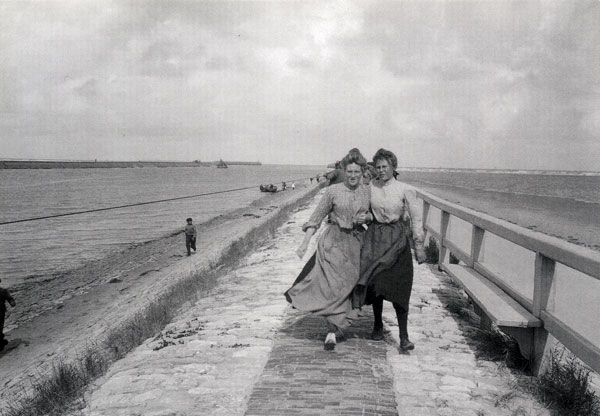
Georges Maroniez (1865-1933) and the École de Wissant
📷 Georges Maroniez via Médiathèque de Cambrai — Public Domain
Originally from Douai, Georges Maroniez pursued a dual career as a magistrate and painter before dedicating himself entirely to art in 1905. A living room in Wissant introduced him to the Opal Coast. In his coastal landscapes and harbour scenes, he captured the daily life of North Sea fishermen — their labour, their waiting, their courage.
Abel Bertram (1871-1954) and the beaches of the North
Born in Saint-Omer, Abel Bertram studied at the Beaux-Arts in Lille before joining Bonnat's studio in Paris. His vibrant use of colour, which aligns him with the Fauves, is always tempered by his attachment to the muted tones and grey skies of his native region. He captured the beaches of the North, especially those of Gravelines, with notations that are both delicate and powerful. His 'View of the Port of Gravelines, the Petit-Fort-Philippe lighthouse' is held at the Boucher-de-Perthes Museum in Abbeville.
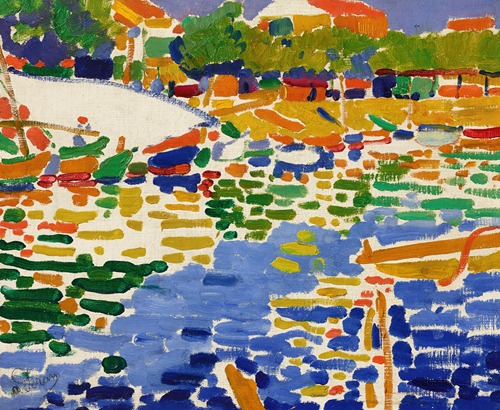
André Derain (1880-1954) and Fauvism
📷 André Derain via Artvee — Public Domain
One of the fathers of Fauvism painted the channel of Gravelines with the characteristic chromatic boldness of the movement. In 1946, he painted 'Boats at Gravelines', a work reproduced as a lithograph by the Mourlot workshops.
Nicolas de Staël (1914-1955): the nomad of light
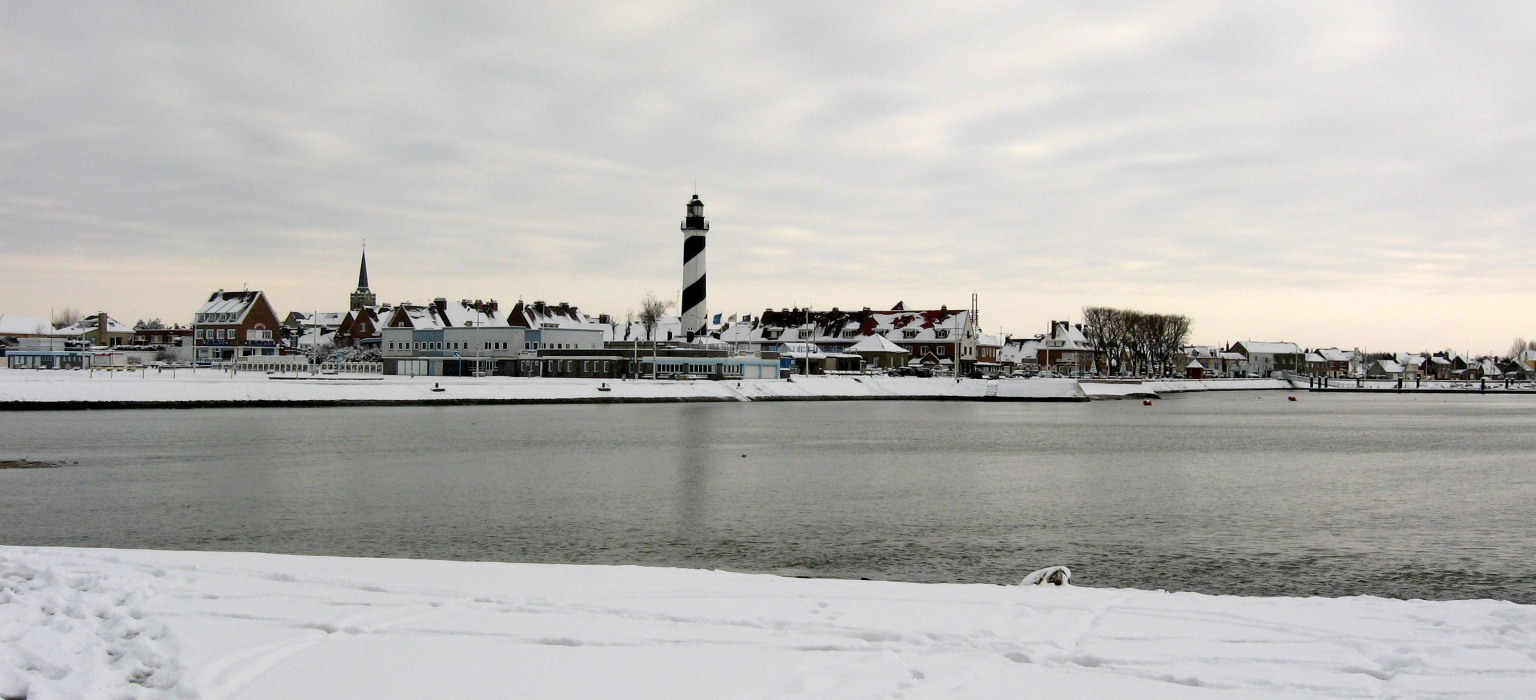
Poised on the boundary between abstract and figurative, Nicolas de Staël living roomned in July 1954 in the Nord-Pas-de-Calais region. The boats and channel at Gravelines, the beaches of Grand-Fort-Philippe, Cap Blanc-Nez and Cap Gris-Nez inspired a series of seascapes with muted fluidity and an almost transparent texture. His 'Lighthouse at Gravelines' (1954, 60 × 81 cm, private collection in Winterthur) bears witness to his fascination with our coastline — the same Petit-Fort-Philippe lighthouse you can see from the windows of the holiday home.
Eugène Leroy (1910-2000): strata and texture
A major figure in 20th-century art, Eugène Leroy was born in Tourcoing. From 1945 to 1950, he painted the North Sea landscapes near Gravelines in large watercolours with dark, grey tones. In 1979, a major retrospective of his engraved work took place in Gravelines. He was a friend and mentor to Arthur Van Hecke.
The Group of Gravelines: Van Hecke and His Companions
Arthur Van Hecke (1924-2003): The Expressionist of Petit-Fort-Philippe
Born in a working-class district of Roubaix, Arthur Van Hecke moved to Petit-Fort-Philippe in 1957, captivated by the spectacle of the sea. He was welcomed like a son by the fisherman Simon Zonnequin, known as Captain Simon. In 1961, he founded the Group of Gravelines with Jean Bertaux, Jean Castanier and Raymond Picque. Together, they created a print collection in 1975, which led to the Museum of Drawing and Original Printmaking, inaugurated in 1982.
His masterpiece, 'The Death of Captain Simon' (1969), acquired by the town in 2010, depicts the old fisherman lying on his bed — with a twilight sky background typical of Flemish Expressionism. For those interested in the painters of the Aa canal Gravelines, this work is a must-see.
Raymond Picque, Charles Gadenne and Nees Van Steelandt
Co-founder of the Group, Raymond Picque spent his life painting the characters of Grand-Fort-Philippe and the shipbuilding workshops of the port. Charles Gadenne, a sculptor trained by Eugène Leroy, succeeded Van Hecke as president in 1971: his life-size bronzes still populate the gardens of Gravelines, notably 'La Vigie' in the Arsenal gardens. Nees van Steelandt, an adopted son of Grand-Fort-Philippe, would swap his canvases for meals in the village cafés — many locals still own one today.
Marcel Gromaire (1892-1971) and Louis Evrard (1905-1989)
Marcel Gromaire left an exceptional legacy to Gravelines: in 1976, his son François donated a collection of one hundred and fifty etchings to the town, a treasure of the municipal collection. Louis Evrard, a painter from Dunkirk, regularly returned to paint beached boats and gatherings of fishermen — his fondness for muted tones earned him the affectionate nickname 'Grey Weather'.
Today's artists: Gravelines Art and the Painters of the Aa Canal Gravelines
The tradition of the painters of the Aa canal Gravelines lives on thanks to the Gravelines Art association, which organises the 'Painters of the Canal' event every summer. In 2026, the event runs from 12 to 14 August at the former Merlen cinema hall in Gravelines, where 14 artists (painters, photographers, mosaic artists) exhibit their work from 2pm to 6pm.
This event continues the legacy of the Domus Fortis collective (founded in 2016 by Jean-Claude Bouchery), which for nearly a decade brought live painting to the forecourt of the Petit-Fort-Philippe lighthouse. Today, it is Gravelines Art that carries the torch, with a refreshed format blending indoor exhibitions with outdoor creation.
To explore this heritage in depth, the Vauban fortress of Gravelines provides the natural architectural setting for this artistic story. The maritime heritage museums of Gravelines perfectly complement the pictorial journey.
Practical Information 2026
📍 Address & Access
Musée du Dessin et de l'Estampe Originale
Arsenal, place Albert Denvers — 59820 Gravelines
Housed in an 18th-century powder magazine designed by Vauban.
From the holiday home Bouteille à la Mer at Grand-Fort-Philippe: 2 km — 🚗 5 min by car, 🚴 10 min by bike.
Contact: 03 28 51 81 04 — musee-estampe.fr
🕒 Opening Hours
Open daily except Tuesdays, from 2pm to 5:30pm.
Closed on: 1 May, 1 November, 24-25-31 December, 1 January.
⚠️ The museum renews its exhibitions twice a year. Check the official website for opening hours before your visit.
💶 Admission
Full price: €3.50 — Concessions: €2.50 — Free for under-18s.
Free for all on the first Sunday of the month and during Heritage Days.
Current exhibitions (until 8 November 2026): 'K Print — Korean Woodblock Prints' (labelled Exhibition of National Interest) and 'Traits de mémoire — Drawings and Prints by Jacques Declercq'.
⏳ Duration & Accessibility
Allow 1 to 1.5 hours for a full visit. Ground-floor rooms and temporary exhibition are wheelchair accessible. Underground casemates are not accessible. Permanent collection: over 22,000 prints spanning five centuries of engraving history.
Our Take on Holiday home
From the holiday home Bouteille à la Mer in Grand-Fort-Philippe, you're right in the heart of the landscape that inspired the greatest painters of the Aa canal Gravelines — Boudin, Seurat, Chigot and Van Hecke. The museum is just 2 km away, a 10-minute bike ride through the Flemish dunes and Vauban fortifications, or 5 minutes by car.
What do we love most? The unique atmosphere of this museum, housed in a former underground powder magazine. The vaulted rooms create the perfect setting for delicate prints. And on fine days, the 'Painters at the Channel' group from the Gravelines Art association brings the tradition back to life — right where Seurat and Chigot set up their easels over 130 years ago. In 2026, don't miss 'K Print', a fascinating dive into the art of Korean woodblock printing, designated an Exhibition of National Interest.
Not to be missed this summer: the Son et Lumière of Gravelines celebrates its 40th anniversary on 20 August 2026 — a spectacular show projected onto the Vauban ramparts, just 5 minutes from holiday home.
Nearby: the MUba Eugène Leroy in Tourcoing (45 min), La Piscine in Roubaix with its Gromaire and Van Hecke collections (50 min), and the LAAC in Dunkirk for contemporary art (20 min).
Ready to explore the region's heritage?
Book your living room at holiday home "Bouteille à la Mer" now and enjoy the perfect starting point for your visits.
FAQ
Where can I see Seurat’s works linked to Gravelines?
The four paintings created at Gravelines in 1890 are held in international museums: New York (MoMA), London (National Gallery), Indianapolis and Otterlo (Netherlands). The Courtauld Gallery in London hosted the world’s first exhibition dedicated to Seurat’s seascapes until 17 May 2026. Locally, the Musée du dessin et de l'estampe originale and the Tourist Office offer a discovery trail of the painted locations.
When is the ‘Peintres au Chenal’ event at Gravelines in 2026?
The Gravelines Art association organises the 2026 edition from 12 to 14 August, 2pm to 6pm, at the former Merlen cinema hall in Gravelines. Fourteen artists — painters, photographers and mosaicists — exhibit their works. Outdoor painting sessions are also held on the forecourt of the Petit-Fort-Philippe lighthouse. Contact the Tourist Office on 03 28 26 27 28 for the full programme.
Is there a museum dedicated to the painters of the Aa canal Gravelines at Gravelines?
Yes, the Musée du dessin et de l'estampe originale, housed in an 18th-century Vauban powder magazine, holds over 22,000 prints including the collection of the Gravelines Group founded by Arthur Van Hecke in 1961. Open daily except Tuesday, 2pm to 5.30pm. Admission: €3.50 (free under-18s). From the holiday home Bouteille à la Mer: 2 km, 5 minutes by car. 2026 exhibitions: ‘K Print — Korean Woodcuts’ (national label) and ‘Traits de mémoire — Jacques Declercq’, until 8 November 2026.